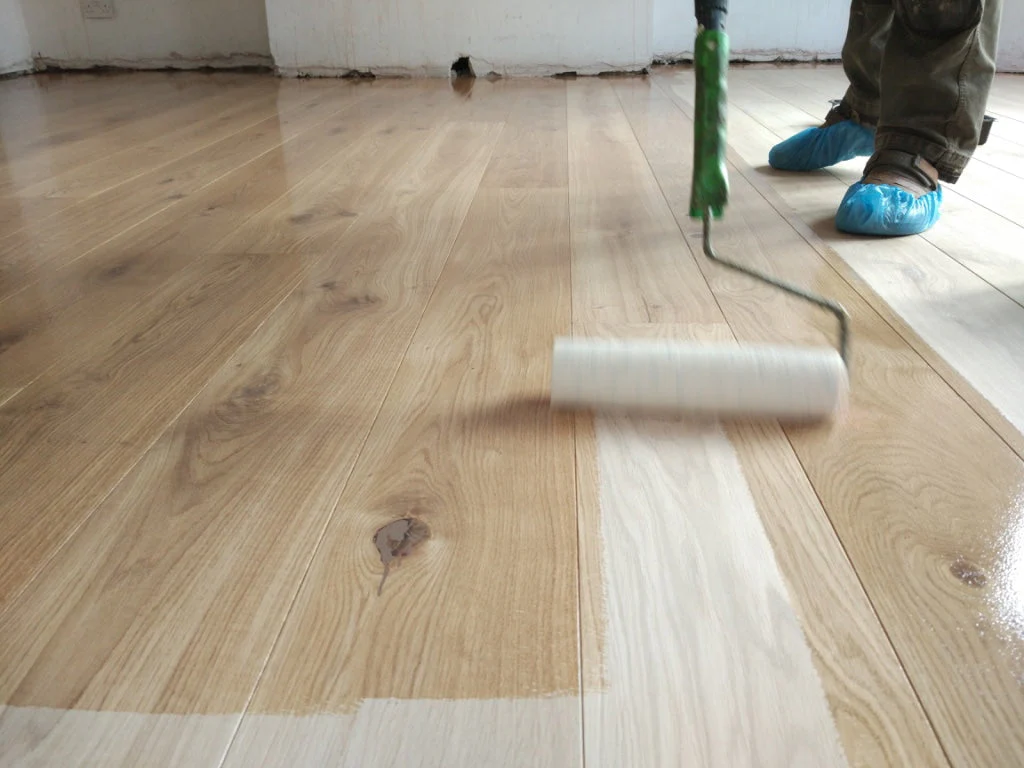
Sealing your wooden floor is essential to protect it from wear and tear while enhancing its natural beauty. The type of seal you choose not only affects the durability and maintenance of your floor but also influences its appearance and character. Here’s an overview of the most common types of protective seals:
Seal Types: Overview
The most popular types of wood floor seals are:
Oil/Waxoil-Based
Water-Based Lacquers
2-Part Polyurethane Lacquers
Each seal type—and even products from different manufacturers—has unique wear patterns, maintenance requirements, and effects on the wood’s appearance. Seals are also available in different sheen levels: Matt, Satin, and Gloss—with Satin being the most commonly chosen.
It’s important to note that all seals require a curing period after the final coat dries, typically 7–10 days, during which the floor should not be walked on or covered.
Oil & Waxoil-Based Seals
Characteristics:
Oil and waxoil seals penetrate deep into the wood, enriching the natural grain and enhancing warm tones, such as orange and yellow hues. They create a breathable finish that’s easy to repair locally but requires more frequent maintenance. Non-yellowing versions are available for certain finishes.
- Pros:
– Enhances the wood’s natural grain and warmth.
– Easy to maintain and repair locally. - Cons:
– Accentuates warm tones, which may not suit all styles.
– Requires regular reapplication and has longer drying times (up to 12 hours between coats).
Water-Based Lacquers (Polyurethane/Acrylic)
Characteristics:
Water-based lacquers provide a clear, light finish that dries quickly and is less prone to yellowing over time. This makes them ideal for lighter woods or contemporary designs where maintaining a natural tone is important.
- Pros:
– Faster drying times and environmentally friendly.
– Helps maintain the wood’s natural colour.
– Modern options are highly durable. - Cons:
– Durability may vary by brand, and some may require more frequent recoating.
– Patch repairs are challenging and may require sanding and refinishing the entire area.
2-Part Polyurethane Lacquers
Characteristics:
This industrial-strength seal creates an incredibly tough surface, making it a popular choice for high-traffic areas and commercial settings.
- Pros:
– Extremely durable and resistant to wear and abrasion.
– High-quality products are usually non-yellowing.
– Fast drying and shorter curing times compared to other finishes. - Cons:
– Damage often requires sanding and refinishing the entire area.
– More expensive than other options.
Choosing the Right Seal
Selecting the right seal depends on your priorities:
- If you value a natural look and easy repairs, an oil or waxoil-based seal is a great choice.
- For a light, contemporary finish that dries quickly, water-based lacquers are an excellent option.
- For maximum durability in high-traffic areas, 2-part polyurethane lacquers offer the best protection.
By understanding the advantages and limitations of each type, you can choose a seal that not only enhances the beauty of your wooden floor but also suits your lifestyle and maintenance preferences.